
If you’ve ever read the back label of a commercial cleaning spray and realized you can’t pronounce half the ingredients, you’re not alone. Millions of US households are making the switch to DIY natural cleaners — and it’s not just a “crunchy” trend. It’s about saving money, protecting your family from volatile organic compounds (VOCs), and taking back control over what gets sprayed in the rooms where your kids play and your pets nap.
Here’s the good news: the most effective natural cleaning recipes don’t require essential oils from a boutique or specialty powders shipped overseas. Everything you need is probably already in your kitchen. In this post, you’ll learn six practical, step-by-step recipes using pantry ingredients like white vinegar, baking soda, lemon, and rubbing alcohol. We’ll also cover the safety rules you genuinely need to know (yes, there are a few combos you should never mix), when it’s smarter to reach for a store-bought product, and how to store your homemade cleaners so they actually last.
Let’s get cleaning.
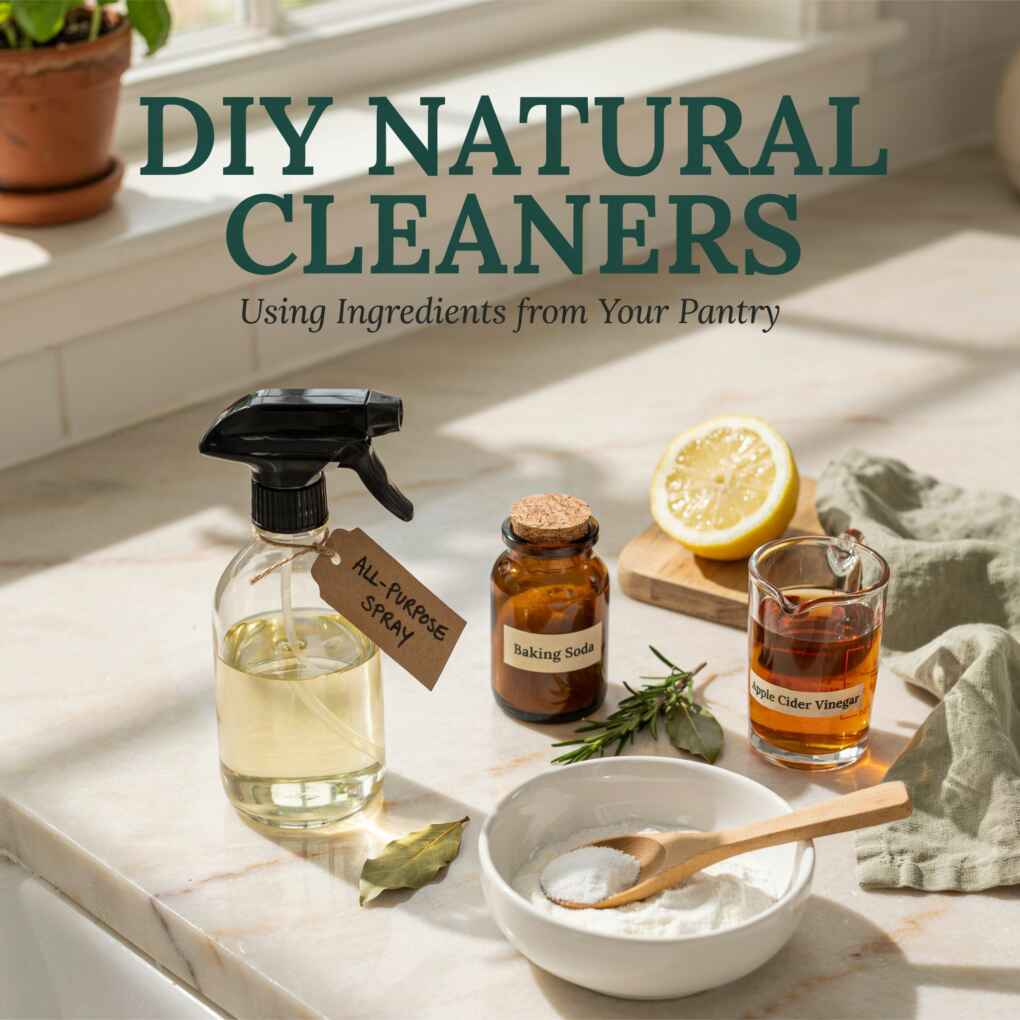
Why Choose Natural Cleaners?
Switching to homemade cleaners isn’t just an aesthetic choice — it has real, measurable impacts on your home environment and your wallet.
Health benefits. The average US home contains dozens of products that emit VOCs — gases linked to headaches, respiratory irritation, and long-term health risks. According to the US Environmental Protection Agency (EPA), indoor air can be two to five times more polluted than outdoor air, largely due to cleaning products, air fresheners, and pesticides. Non-toxic cleaners made from pantry staples like vinegar and baking soda dramatically cut down these emissions. Families with young children, older adults, or anyone with asthma or chemical sensitivities benefit most from the switch.
Environmental benefits. Conventional cleaners often contain phosphates, chlorine bleach, and synthetic fragrances that persist in waterways after they rinse down the drain. Eco-friendly cleaning with biodegradable ingredients reduces that load. Bonus: refillable glass spray bottles mean fewer single-use plastic containers end up in landfills.
Cost savings. A gallon of white vinegar typically costs under $4 at any US grocery store and can make dozens of bottles of all-purpose cleaner. A box of baking soda runs about $1. Compared to $5–$8 per bottle for specialty cleaners, the math is obvious. Over a year, a household that DIYs its most-used cleaners can save $150–$300 without noticing a drop in cleaning performance.
Pantry Power: The Ingredients and How They Work
Before we dive into recipes, let’s talk about the workhorses behind every DIY natural cleaner. Understanding what each ingredient actually does will help you improvise, swap, and troubleshoot on the fly.
White vinegar (5% acetic acid). The backbone of most homemade cleaners. It’s acidic, which means it dissolves mineral deposits, soap scum, and hard-water stains. It also cuts through grease and deodorizes. Keep a gallon jug on hand — you’ll use a lot of it. Note: vinegar is not a registered disinfectant, despite what some corners of the internet claim.
Baking soda (sodium bicarbonate). A mild alkali that works as a gentle abrasive, a deodorizer, and a degreaser. It reacts with acids (like vinegar) to create fizzing action that helps lift grime from surfaces — though the reaction itself mostly neutralizes both ingredients, so they’re best used in sequence rather than mixed together.
Lemon and citrus. Citric acid in lemons cuts grease, brightens surfaces, and leaves a fresh scent. Lemon juice works well on copper, brass, and stainless steel, and it helps lift stains on cutting boards.
Salt. Coarse kosher salt makes an excellent scrub when paired with lemon halves or a little castile soap. Great for cast-iron skillets and wooden cutting boards.
Rubbing alcohol (70% isopropyl). A legitimate disinfectant when used at the right concentration. It evaporates quickly, making it ideal for glass, mirrors, and high-touch surfaces like doorknobs and light switches.
Hydrogen peroxide (3%). A mild disinfectant and whitener. It breaks down into water and oxygen, making it one of the safest options for bathroom surfaces and cutting boards. Keep it in its original dark bottle — light destroys it fast.
Castile soap. A vegetable-oil-based soap (Dr. Bronner’s is the classic US brand). It lifts dirt and grease without synthetic surfactants. Use sparingly — too much leaves film.
Olive oil and coconut oil. Used in small amounts for polishing wood and stainless steel. Not cleaners themselves, but useful finishing agents.
Essential oils (optional). Lemon, tea tree, lavender, and peppermint add fragrance and, in a few cases, mild antimicrobial properties. They are not a substitute for proper disinfection. Use only for scent.
Ingredient limitations to keep in mind
- Vinegar will etch natural stone — no granite, marble, travertine, or limestone.
- Castile soap and vinegar cancel each other out when mixed, leaving an oily curd. Use them in separate steps.
- Hydrogen peroxide and vinegar should never be combined in a single container (more on this below).
6 Practical DIY Natural Cleaner Recipes
1. All-Purpose Vinegar-Based Cleaner
The workhorse. Safe for laminate counters, tile, vinyl, sealed hardwood floors (sparingly), glass, and most sinks. Not for granite, marble, or unsealed stone.
Ingredients:
- 1 cup white vinegar
- 1 cup distilled water
- 10–15 drops essential oil (lemon, tea tree, or lavender)
Tools: 16 oz glass or BPA-free spray bottle, funnel
Method:
- Pour vinegar and water into the spray bottle using the funnel.
- Add essential oil drops.
- Screw on the spray top and shake to combine.
Best uses: Daily counter wipe-downs, tile splash-backs, stovetops, windowsills.
Storage: Keeps 6+ months at room temperature, out of direct sunlight.
Safety note: Label clearly. Keep away from natural stone and unsealed grout.
2. Baking Soda Paste Stain Remover
For the messes that need abrasion — baked-on oven grease, sink rings, grout lines, and stubborn food stains on cutting boards.
Ingredients:
- 3 tbsp baking soda
- 1 tbsp water (add more as needed)
Tools: Small bowl, sponge or stiff-bristle brush
Method:
- Mix baking soda and water until a thick paste forms.
- Apply directly to the stain and let sit 10–15 minutes.
- Scrub in gentle circles, then rinse thoroughly with warm water.
- For ovens: apply a thick layer, leave overnight, wipe out in the morning.
Best uses: Stainless-steel sinks, oven interiors, tile grout, enamel cookware.
Storage: Make fresh each use — paste dries out if stored.
Safety note: Mildly abrasive — don’t use on delicate acrylic, fiberglass tubs, or polished chrome without patch-testing first.
3. Glass and Mirror Cleaner
Commercial glass cleaners often rely on ammonia for streak-free shine. This version uses rubbing alcohol and vinegar for similar results, without the harsh fumes.
Ingredients:
- 1 cup distilled water
- 1 cup 70% rubbing alcohol
- 2 tbsp white vinegar
Tools: 16 oz spray bottle, microfiber cloth (paper towels leave lint)
Method:
- Combine all ingredients in the spray bottle.
- Shake gently.
- Spray onto glass or mirror and wipe with a clean, dry microfiber cloth in an S-pattern for best results.
Best uses: Windows, bathroom mirrors, glass tabletops, stainless-steel appliances.
Storage: Stable for 6+ months. The alcohol evaporates if left open, so keep the lid tight.
Safety note: Rubbing alcohol is flammable — keep away from open flames and stovetops during application. Ensure room is ventilated.
4. Natural Disinfectant Spray (High-Touch Surfaces)
This recipe is for when “clean” isn’t enough and you genuinely need to reduce germs — think flu season, after guests, or on doorknobs and light switches.
Ingredients:
- Undiluted 3% hydrogen peroxide (in its original brown bottle, or transferred to a dark/opaque spray bottle)
Tools: Opaque spray bottle, disposable gloves (optional)
Method:
- Pour hydrogen peroxide into an opaque spray bottle.
- Spray the surface until visibly wet.
- Let sit for 1 full minute (contact time matters for disinfection).
- Wipe with a clean cloth or let air-dry.
Best uses: Doorknobs, light switches, faucet handles, refrigerator handles, toilet flushers, cutting boards (after raw meat contact).
Storage: Hydrogen peroxide degrades quickly — replace every 30 days once opened, and always store in a dark bottle.
Safety note: While hydrogen peroxide is EPA-recognized as an antimicrobial agent, it is not a substitute for EPA-registered disinfectants during active illness outbreaks. The CDC recommends following product-specific guidance in those situations. Never mix hydrogen peroxide with vinegar in the same container — the reaction produces peracetic acid, which is corrosive and a respiratory irritant.
5. Wood Polish (Sealed Wood Only)
For dining tables, cabinets, and shelves that just need a refresh and a healthy gleam — not for antiques, waxed finishes, or oiled wood.
Ingredients:
- 2 tbsp extra-virgin olive oil
- 1 tsp fresh lemon juice (or white vinegar)
Tools: Soft, lint-free cloth
Method:
- Whisk olive oil and lemon juice together in a small bowl.
- Dip the cloth and rub a thin layer onto the wood, following the grain.
- Buff with a clean, dry cloth until no oily residue remains.
Best uses: Sealed dining tables, wood shelves, butcher blocks (food-safe), sealed wood furniture.
Storage: Make fresh — oil can go rancid if stored.
Safety note: Patch-test on a hidden area first. On waxed or oiled vintage furniture, this may leave a gummy film — consult the manufacturer’s guidance.
6. Bathroom Mildew and Grout Cleaner
Bathroom grout is the battleground between everyday moisture and mildew. This two-step method (not a mixed bottle) gets real results without bleach fumes.
Ingredients:
- ½ cup white vinegar (in one spray bottle)
- ½ cup 3% hydrogen peroxide (in a separate, opaque spray bottle)
Tools: Two spray bottles, stiff grout brush, gloves, fan or open window
Method:
- Spray the grout with vinegar and let sit 5 minutes.
- Scrub lightly with the grout brush.
- Spray with hydrogen peroxide and let sit another 5 minutes.
- Rinse with warm water and dry with a towel.
Best uses: Tile grout, shower corners, tub caulking, mildewed silicone.
Storage: Use within a week — peroxide loses strength quickly.
Safety note: Use in a well-ventilated bathroom. Wear gloves if you have sensitive skin. Do not mix the two liquids into one bottle — the combination creates peracetic acid, which can irritate skin, eyes, and lungs.
Safety, Myths, and What Not to Mix
DIY cleaners are generally safer than commercial alternatives, but “natural” doesn’t mean “harmless in any combination.” Post this list on the inside of your cleaning cabinet.
❌ Never mix:
- Bleach + vinegar → produces chlorine gas (potentially fatal in enclosed spaces).
- Bleach + ammonia → produces chloramine gas.
- Bleach + rubbing alcohol → produces chloroform.
- Hydrogen peroxide + vinegar in the same container → produces peracetic acid.
- Castile soap + vinegar → not toxic, but leaves an oily, curdled mess.
✅ Always do:
- Label every homemade bottle with contents and date.
- Wear gloves for prolonged scrubbing or when using hydrogen peroxide or rubbing alcohol.
- Ventilate the room — open a window or run an exhaust fan.
- Keep all cleaners, even natural ones, out of reach of children and pets.
- Patch-test on an inconspicuous area before treating a visible surface.
- Store in glass or HDPE plastic — essential oils and vinegar can degrade cheap plastics over time.
Disclaimer: This post is for informational purposes only. Always patch-test new cleaners and follow product labels. For serious mold or contamination, consult a professional.
When to Choose Store-Bought Cleaners
Natural pantry cleaners handle the vast majority of household tasks — but they aren’t a universal replacement. Reach for an EPA-registered disinfectant when:
- Someone in your home is actively ill with a contagious pathogen (flu, norovirus, COVID-19).
- You’re dealing with visible black mold covering more than a few square feet (the EPA recommends professional remediation at that scale).
- You’re cleaning after raw poultry or a significant biohazard (pet accidents, blood, vomit).
- A surface requires hospital-grade disinfection (childcare settings, immunocompromised households).
And for specific finishes — antique wood, delicate natural stone, silk upholstery — a product formulated by the manufacturer is often the safest bet.
Storage, Labeling, and Eco Tips
- Use glass bottles whenever possible — they’re durable, don’t absorb odors, and are endlessly recyclable.
- Label with painter’s tape and a Sharpie — include the recipe and the date made.
- Shelf life: Vinegar-based cleaners last 6+ months. Hydrogen peroxide degrades within 30 days once opened. Essential oil blends lose scent over time but remain functional.
- No refrigeration needed for any of these recipes.
- Zero-waste upgrades: Buy vinegar in gallon jugs, baking soda in bulk boxes, and look for refill stations at local co-ops or natural grocery stores. Concentrated versions of these recipes (2:1 vinegar-to-water, for example) can be diluted at cleaning time to reduce packaging.
Quick-Reference Recipe Box
| Cleaner | Recipe | Best For |
|---|---|---|
| All-Purpose | 1 C vinegar + 1 C water + 10 drops lemon EO | Counters, tile, glass (not stone) |
| Stain Paste | 3 tbsp baking soda + 1 tbsp water | Ovens, sinks, grout |
| Glass Spray | 1 C water + 1 C rubbing alcohol + 2 tbsp vinegar | Mirrors, windows, stainless steel |
| Disinfectant | Undiluted 3% hydrogen peroxide | High-touch surfaces, cutting boards |
| Wood Polish | 2 tbsp olive oil + 1 tsp lemon juice | Sealed wood furniture |
| Grout Rescue | Vinegar + peroxide, applied separately | Shower tile, mildewed grout |
Try One Recipe This Week
Pick the recipe that solves a problem you already have — the oven that needs a scrub, the grout that’s seen better days, the streaky bathroom mirror — and make it tonight. Snap a before-and-after photo and share it in the comments or tag us on social. If you’d like a printable PDF version of these six recipes to stick on the inside of your cleaning cabinet, sign up for our weekly eco-home newsletter and we’ll send it straight to your inbox.
Happy (and cleaner) home!