
Your home’s siding looks grimy after winter—do you blast it with high-pressure water or go gentle? Maybe you’ve noticed black streaks creeping down your roof after summer humidity, or your deck has turned that unsightly green-gray from mold. You grab your neighbor’s pressure washer, but wait—could that powerful spray actually damage your roof or strip paint? You’re not alone. Every year, thousands of homeowners accidentally harm their properties by choosing the wrong cleaning method. The debate between soft washing vs pressure washing isn’t just technical—it’s about protecting your biggest investment.
Here’s the truth: Pressure washing isn’t always the answer, even though it’s the go-to for many DIYers. In fact, for 70% of home exteriors (roofs, vinyl siding, stucco), high-pressure cleaning causes more harm than good. Soft washing, the gentler alternative, often delivers longer-lasting results without the risks. But when should you use each method? We’ll cut through the confusion with a no-nonsense breakdown of soft washing vs pressure washing—complete with real-world examples, cost comparisons, and pro tips you won’t find on random forums. By the end, you’ll know exactly which method saves your home from damage while making it shine. Let’s dive in.
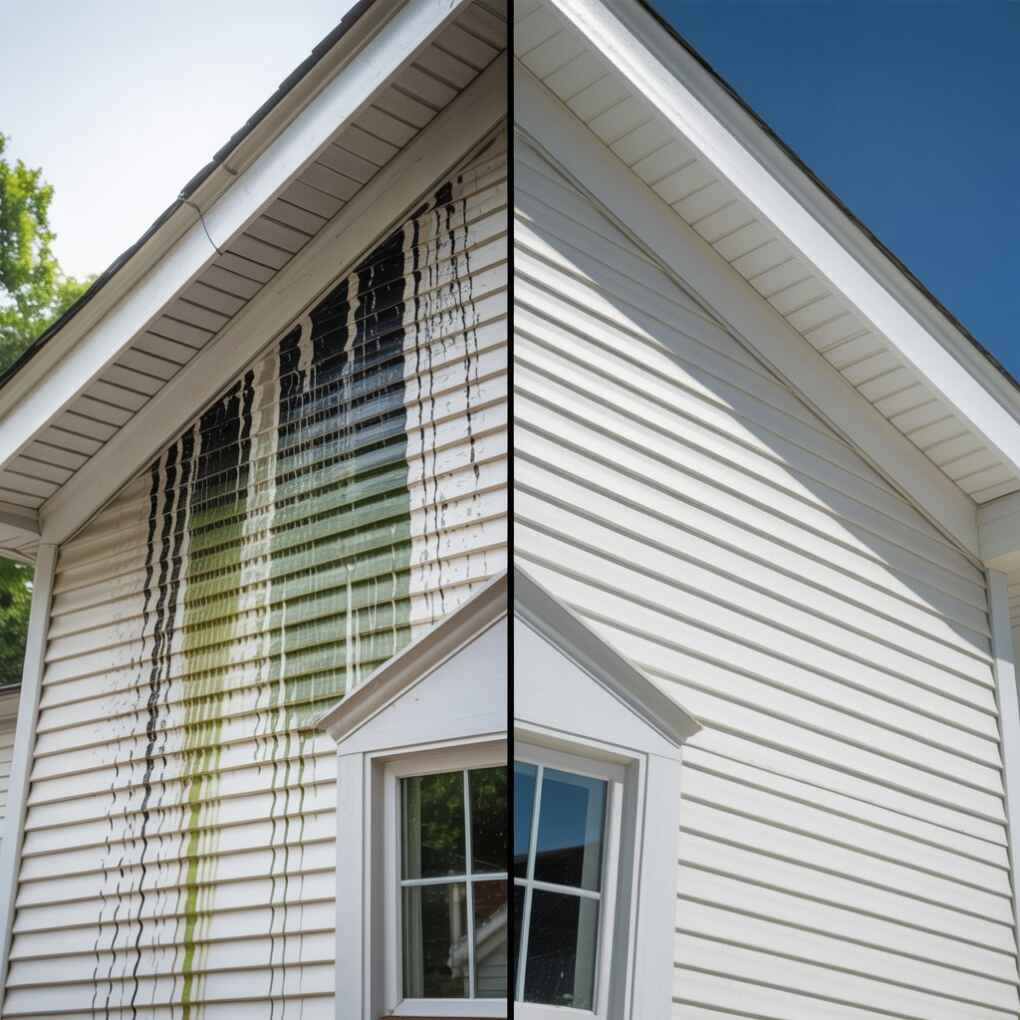
What is Pressure Washing? (And When It Shines)
Pressure washing (sometimes called “power washing”) uses a high-pressure stream of water—typically between $1,500$ and $4,000$ PSI (pounds per square inch)—to blast away dirt, grime, mold, and loose paint. Think of it as a firehose for your home’s exterior. Professionals adjust the pressure using specialized nozzles (like 0° for heavy buildup or 40° for general cleaning) and may add hot water or detergents for stubborn stains.
How it works: Water is forced through a narrow tip at extreme velocity, creating kinetic energy that physically strips contaminants off surfaces. It’s like using a pressure washer to remove caked-on mud from your car—effective, but only on surfaces tough enough to handle the force.
✅ Pressure Washing Pros
- Blazing fast for large, durable areas (e.g., a concrete driveway cleans in 20 minutes).
- Ideal for heavy-duty jobs: Removes oil stains from garage floors, chewing gum from sidewalks, or decades of dirt from brick patios.
- Cost-effective: Lower per-square-foot pricing than soft washing (more on this later).
⚠️ Pressure Washing Risks
- Strips roof granules from asphalt shingles, shortening roof life by 5–10 years (gosoftwash.com).
- Forces water under siding, causing rot or mold inside walls (powerwashenterprise.com).
- Etches concrete or splinters wood if PSI is too high.
Quick Reference: Pressure Washing at a Glance (Click to expand)
| Feature | Details |
|---|---|
| PSI Range | $1,500$–$4,000$ PSI |
| Best For | Concrete driveways, brick patios, stone decks, dumpster pads |
| Key Risk | Surface damage on roofs/siding (granule loss, water intrusion) |
| Speed | ⚡⚡⚡⚡⚡ (Very fast) |
Bottom line: Pressure washing is your heavy hitter for hard surfaces—but treat it like a sledgehammer. Use it only where brute force won’t break things.
What is Soft Washing? The Gentle Giant
Soft washing flips the script. Instead of relying on pressure, it uses low-pressure water ($100$–$500$ PSI—less than your garden hose!) combined with biodegradable cleaning solutions to sanitize surfaces. The magic happens in two steps:
- Apply: A customized mix (often sodium hypochlorite, surfactants, and algaecides) is sprayed onto the surface.
- Dwell: The solution sits for 5–20 minutes, killing mold, algae, and bacteria at the root level.
- Rinse: Gentle low-pressure water rinses away the dead contaminants.
How it works: Soft washing is like precision surgery for your home. The chemicals do 90% of the work by breaking down organic growth (that black roof streak? It’s Gloeocapsa magma bacteria), while low pressure ensures zero surface damage.
✅ Soft Washing Benefits
- Safe for delicate surfaces: Preserves asphalt shingles, vinyl siding, and painted wood (southeastsoftwash.com).
- Longer-lasting results: Kills stains at the source, preventing regrowth for 2–5 years vs. 6–12 months with pressure washing alone.
- Eco-friendly: EPA-compliant solutions break down safely; no harsh runoff (pressuredr.com).
⚠️ Soft Washing Limitations
- Slower process: Requires dwell time for chemicals to work.
- Higher upfront cost: Chemicals add to the price (but you save long-term with fewer repeat cleanings).
Quick Reference: Soft Washing at a Glance (Click to expand)
| Feature | Details |
|---|---|
| PSI Range | $100$–$500$ PSI |
| Best For | Roofs, vinyl siding, stucco, gutters, painted surfaces |
| Key Advantage | Kills organic growth at root level; zero surface damage |
| Longevity | 🌱🌱🌱🌱 (2–5 years) |
Bottom line: Soft washing is your go-to for anything delicate or organic. It’s not “weak”—it’s smarter.
Soft Washing vs Pressure Washing: Head-to-Head Comparison
Let’s settle the soft washing vs pressure washing debate with hard facts. This isn’t about which is “better”—it’s about which is right for your surface.
| Aspect | Soft Washing | Pressure Washing |
|---|---|---|
| Pressure Level | Low ($100$–$500$ PSI) | High ($1,500$–$4,000$ PSI) |
| Cleaning Power | Chemical-based (kills at root level) | Mechanical force (blasts contaminants) |
| Surface Safety | ✅ Safe for roofs/siding/stucco | ❌ Risks granule loss, water intrusion |
| Speed | ⏳ Slower (dwell time required) | ⚡ Faster (immediate rinse-off) |
| Cost | $$$ $0.30–$0.50/sq ft | $$ $0.20–$0.40/sq ft |
| Longevity | 🌱 2–5 years (prevents regrowth) | 🌱 6–12 months (surface-only clean) |
| Eco-Friendliness | Biodegradable solutions; low water use | High water waste; no chemical kill |
Real-World Scenarios: Why Pressure Washing Fails on Roofs
Imagine your asphalt shingle roof covered in black algae streaks. Pressure washing at $2,500$ PSI might seem effective—it blasts off the top layer of grime. But here’s what you don’t see:
- Granule loss: High pressure scours protective granules off shingles, exposing the asphalt mat to UV damage (powerwashenterprise.com).
- Water intrusion: Forces moisture under shingles, causing leaks or attic mold.
- Short-term fix: Algae regrows in 6–12 months because roots remain intact.
Soft washing solves this: A $150$ PSI application of sodium hypochlorite kills algae deep within the shingle pores. No granule loss. No leaks. And your roof stays clean for 3+ years—proven by studies from roofing associations like NRCA.
When Pressure Washing Wins (Without the Damage)
Pressure washing isn’t obsolete—it’s essential for the right jobs:
- Concrete driveways with oil stains: High PSI cuts through grease.
- Brick patios with embedded dirt: Mechanical force lifts particles from pores.
- Commercial dumpster pads: Requires aggressive cleaning for sanitation.
💡 Pro Tip: Always start with the lowest effective PSI. For concrete, $2,500$ PSI works; for wood decks, drop to $1,500$ PSI. Test a hidden area first!
Pros and Cons of Each Method: The Unfiltered Truth
Pressure Washing Pros & Cons
✅ Pros:
- Blazing speed for large hardscapes (e.g., cleans a 1,000 sq ft driveway in 30 mins).
- Cost-efficient for commercial lots or heavily soiled concrete.
- Removes deep-set stains (like rust or paint splatters) that chemicals can’t.
❌ Cons:
- Roof damage: 80% of premature roof failures trace back to improper high-pressure cleaning (NRCA Roofing Manual).
- Siding hazards: Forces water behind vinyl panels, causing rot (a $1,500+ repair).
- Window risks: High PSI can crack tempered glass or dislodge seals.
Soft Washing Pros & Cons
✅ Pros:
- Roof-safe: Zero granule loss—preserves your $15,000 investment.
- Eco-smart: Uses 80% less water than pressure washing; solutions are EPA-approved.
- Long-term value: Fewer repeat cleanings = lower lifetime cost.
❌ Cons:
- Slower: Requires 10–20 mins of dwell time per section.
- Chemical handling: Requires training to avoid plant damage (pros use pre-rinse/neutralizers).
🌟 Homeowner Insight: “After my neighbor pressure-washed his roof, granules clogged the gutters for weeks. Our soft wash? Zero mess, and it’s still clean 3 years later.” — Mark T., Homeowner in Georgia
When to Choose Soft Washing vs Pressure Washing: Your Decision Cheat Sheet
✅ Choose Soft Washing For:
- Roofs (asphalt, tile, metal): Prevents granule loss and leaks.
- Vinyl or wood siding: Avoids cracks, paint stripping, or water intrusion.
- Stucco orEIFS: High pressure erodes textured surfaces.
- Gutters/fascia: Gentle enough for fragile metal.
✅ Choose Pressure Washing For:
- Concrete driveways/patios: Handles oil, grease, and embedded dirt.
- Stone walkways: Removes mud without chemical residue.
- Heavy mildew on decks: Fast cleanup before summer parties.
✅ Hybrid Approach (Best of Both Worlds!)
For brick homes with stained siding:
- Soft wash the siding to kill algae.
- Pressure wash the brick foundation at $1,800$ PSI to remove dirt.
Result: A spotless, damage-free exterior.
🚫 Critical Avoidance: Never use pressure washing on roofs, windows, or painted wood. The risk isn’t worth it.
DIY vs Professional: Don’t Gamble With Your Home
DIY pressure washing is like playing Jenga with your home’s integrity. One wrong angle, and you:
- Strip $500 worth of paint off your deck in minutes.
- Cause $2,000+ water damage by forcing moisture behind siding.
- Risk injury from kickback or ladder falls (pressure washers cause 6,000+ ER visits yearly, per CPSC).
Soft washing DIY? Even riskier:
- Chemical burns from improper sodium hypochlorite handling.
- Plant death from runoff (pros use pre-soak neutralizers).
- Voided warranties: Roof manufacturers like GAF require soft washing.
Why pros win:
- Insurance: Covers accidental damage (DIYers pay out-of-pocket).
- Precision: Calibrated PSI + EPA-compliant solutions.
- Time savings: A pro cleans a 2,000 sq ft home in 2–3 hours vs. your 6+ hour DIY struggle.
💡 Rule of Thumb: If it’s above ground level or made of organic material (wood, shingles), call a pro.
Conclusion: Soft Washing Wins for Most Homes (Here’s Why)
Let’s be real: For 90% of residential exteriors, soft washing beats pressure washing. It’s safer, longer-lasting, and gentler on your home’s “skin.” Pressure washing has its place—but only on surfaces tough enough to handle a firehose. Choosing the wrong method isn’t just wasteful; it’s a gamble with your biggest asset.
Ready to transform your home without the risks? [Contact us for a free quote on soft washing vs pressure washing services]—we’ll inspect your property, recommend the right method, and deliver streak-free results that last. Special offer: Book this month and get 15% off your first soft wash!
FAQ: Soft Washing vs Pressure Washing Demystified
Q: Is soft washing safe for my roof?
A: Absolutely! Soft washing uses <300 PSI and biodegradable solutions that kill algae without damaging shingles. Pressure washing, however, strips protective granules—voiding most manufacturer warranties.
Q: How much does pressure washing cost vs soft washing?
A: Pressure washing averages 0.20–0.40/sq ft; soft washing is 0.30–0.50/sq ft. While soft washing costs slightly more upfront, it lasts 3–5x longer—saving you money long-term.
Q: Can soft washing kill mold on siding?
A: Yes! Its specialty is eliminating organic growth (mold, algae, mildew) at the root. Pressure washing only removes surface stains, so regrowth happens fast.
Q: Will soft washing harm my plants?
A: Not when done professionally. We pre-rinse landscaping, use plant-safe solutions, and apply neutralizers to protect your garden.
Q: How often should I clean my home’s exterior?
A: Soft washing: Every 2–5 years. Pressure washing: Every 6–12 months (but only on hardscapes!). Over-cleaning causes premature wear.